RLL 62: Choose to Believe the Best

Real Life Leading 62:

Choose to Believe the Best in Blended Families

We’ve all had situations in which we’ve been misunderstood: you say one thing, but the message somehow got lost, and the reaction you got was not at all what you expected or intended. This is true in traditional nuclear families, it’s true in friendships and dating relationships, and it’s exceedingly true in blended families. The reason is because so much of our communication is non-verbal. In fact, according to Dr. Albert Mehrabian, author of Silent Messages, only 7% of what we communicate comes through the actual words we use. Now, even if his number is low and the actual percentage of verbal communication is 5x that high, that still means that only about a third of what we communicate comes through our words.

Why is this important in blended families (and other relationships)? Because once we’re aware of it, we can do something that is extremely important and powerful:

Whenever there is doubt about the message being communicated, we can choose to believe the best possible interpretation of the message.
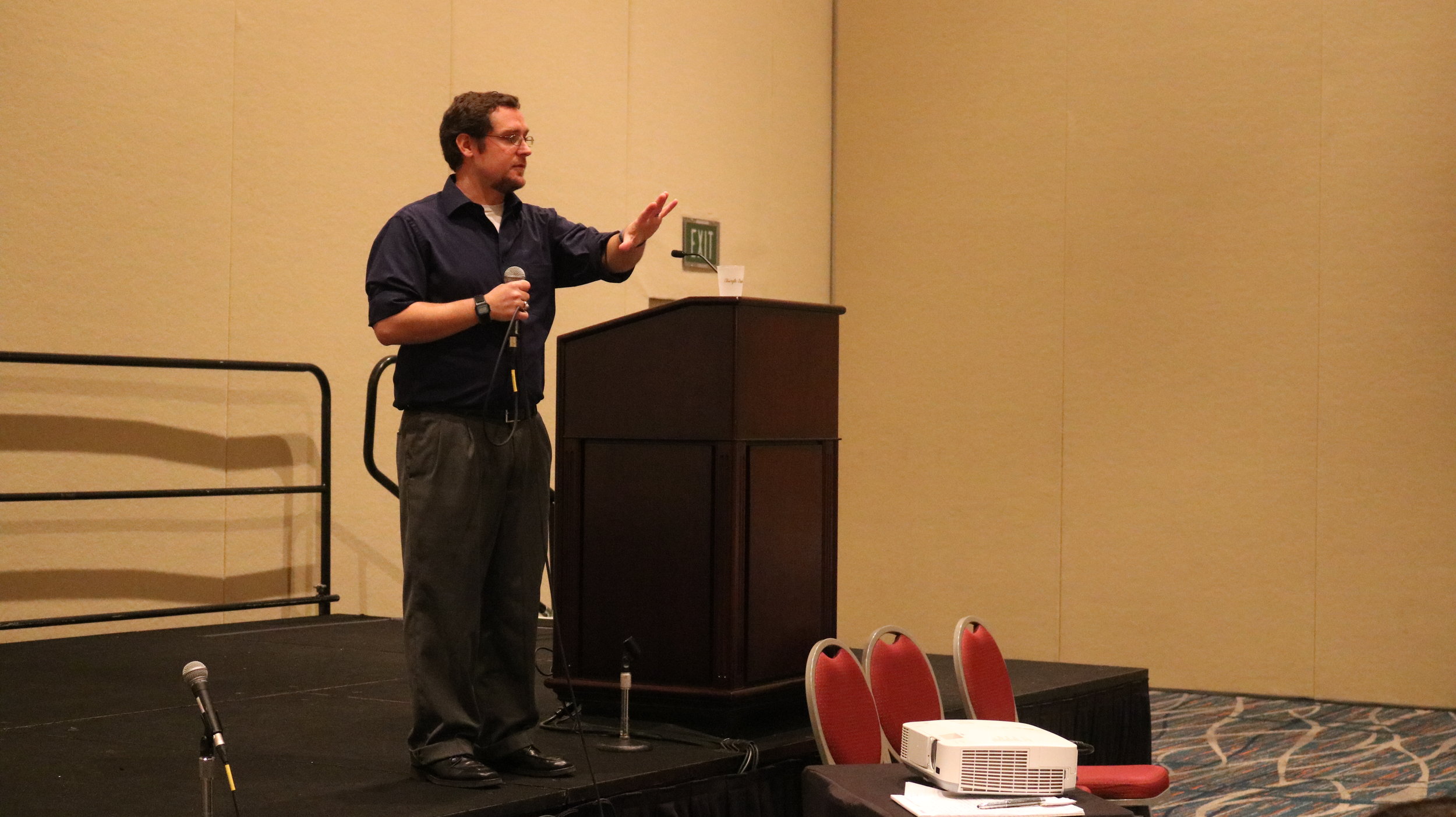
Speaking at the NHSA Conference about Blended Family Life was a great honor!

Speaking at the NHSA Conference about Blended Family Life was a great honor!

Don’t miss the import here: we can choose to believe in the best interpretation of the words. That means we have tremendous control over how we interpret messages, and thus how we respond to them. We don’t have to get offended or angry. We don’t have to assume the other party is trying to hurt us or make us upset.

Think of the last time you had a misunderstanding: how long did it take to clear it up, and how much extra effort was it? Now, imagine how differently that might have gone if each party had shown grace and understanding, choosing to believe the best. How might that look?

One suggestion to clear up miscommunications would be to simply ask (in a kind tone of voice) for clarification. Another would be to say something like, “I’m not sure I’m entirely following, and I want to make sure I understand you correctly.” However you phrase it, show that your intent is to receive the message as it was intended, giving the other person a chance to clear up any misunderstandings.

Will this always clear up every communication issue? Of course not. But, if you make it a habit to choose to believe the best, I can guarantee one thing: you will feel better about your interactions. I can also almost (though not 100%) guarantee one other thing: over the long-term, this will pay dividends in your relationship with the other adults involved. When they see you consistently showing them grace, trying to understand, and looking to be helpful instead of hurtful, they are more likely to respond in kind. Perhaps not immediately, but eventually. Remember, though, that the point is not to change them; the point is to change yourself. Whether the other party ever does respond well or not, you’ll find that you will be more patient, kinder, and more willing to think positively about others. This is the goal.

Also, ask yourself this question, which takes us back to the Golden Rule of our childhood: how would you want them to respond to you? Don’t we want people to believe the best about our intentions and actions, rather than assuming malicious or harmful intent? Then begin by showing that type of grace to others, and see where it takes you.

Action Step: This week, believe the best in all of your blended family interactions, and see how it transforms you and your heart toward the other adults involved.

For more info on this and other blended family topics, come visit me at https://reallifeleading.com/blended-families/

RLL 61: Two Difficulties of Being a Step-parent

RLL 61: Two Difficulties of Being a Step-Parent

[Full disclosure: I am not a step-parent. However, I’m married to one, and all of the information here comes from my discussion with her and with other step-parents (including my girls’ step-dad) over the past few years. I’m grateful for the work, the effort, and the energy my wife, my ex-wife, and my girls’ step-dad put into helping raise our girls. None of us could do it alone; thankfully, we don’t have to.]

Maryellyn and Carly celebrating Carly’s birthday on the water

Maryellyn and Carly celebrating Carly’s birthday on the water

Step-parenting is difficult, one of the most difficult tasks in the world. Why? Well, lots of reasons, many of which people who aren’t involved in it wouldn’t have ever thought about. I know that it was eye-opening for me to have conversations with step-parents because there are various issues or difficulties about step-parenting that simply wouldn’t have occurred to me as the biological parent in the situation. Today, I want to mention just two quick thoughts on what it’s like for step-parents and also on how other people can help encourage them.

1. Step-parents are often given all of the same responsibilities of a biological parent, without the same title, without the guarantee of the positives of parenting (respect, love, even kindness), and without the same level of authority. This is an aspect I had never considered, but when it was pointed out to me, it blew me away. God bless every step-parent in the world for taking on such a difficult and monumental task. As a biological parent, one thing I can do is to set an example to my kids in respecting, loving, and showing kindness to their step-parents simply by doing those things…and not just to my spouse. How can I help make sure that our daughters show their step-dad respect? By being respectful to him myself and by encouraging them to do the same. This also helps me to have a better relationship with him, allowing us to cooperate instead of compete. I learned this lesson from my wife, who along with my ex-wife, has done a great job of working together to help raise our girls.

Another way to help encourage step-parents here is to verbally acknowledge all of the many difficult tasks that step-parents take on. Tell them thank you, and mean it. Show true appreciation for the work they do, the hours they spend helping raise the kids, and the efforts they make to have good relationships with the children.

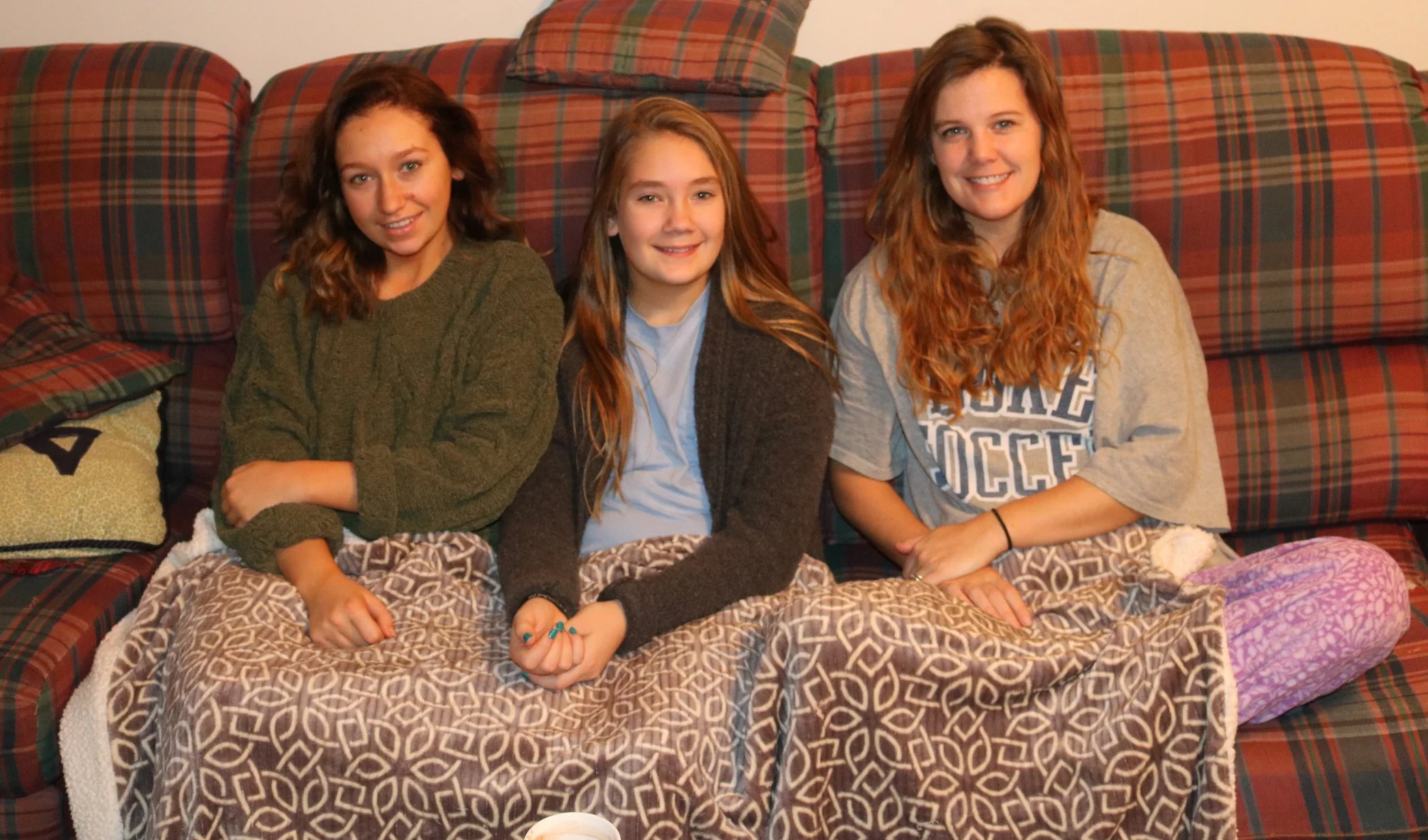
Maryellyn and the girls sharing the couch and a blanket on Christmas morning

Maryellyn and the girls sharing the couch and a blanket on Christmas morning

2. From society, there is often a lack of sympathy and understanding for the stepparents. From those who haven’t experienced it, there is even a lack of recognition of the difficulties of step-parenting. Think of the way step-parents have been portrayed in literature and movies. Very rarely is it positive, and for most of us our first experience with any step-parent was the evil stepmother in Cinderella. On the upside, that is beginning to change somewhat, as step-parenting becomes more common. But here’s where the big gap still exists: almost universally, when you announce to the world that you are or are becoming a parent, people are happy and excited and encouraging.

When you tell people that you’re a stepparent, there’s a noticeably different response, though people often try to hide it. Sometimes it’s judgment, sometimes it’s disapproval, sometimes it’s other things, but very rarely are step-parents responded to in the same way. As a biological parent, what I can do then is to consistently remind both my spouse and other step-parents of how important their task is, how much they are appreciated, and how I support them in helping raise their children.

Ok, there’s two quick thoughts on the difficulties of being a step-parent. Again, God bless you all for your love and for the way you help raise your children!

I’d love to hear your thoughts and responses, as well as other suggestions on how to help encourage step-parents. Thanks!

Action Step: This week, be sure to encourage and thank a step-parent for their effort and energy on behalf of a family you know.

RLL 60--Keys to Blended Family Life

Real Life Leading #60

Keys to Blended Family Life

IMG_5465.JPG

Happy (late) New Year! I’m excited to share with you this first post of 2019 and in doing so to give an update on what the new year holds.

I was blessed to give my presentation on blended families called ‘Four Parents, Two Houses: Parenting Together Despite Difficulties’ at the National Head Start Association conference in Florida just before Christmas. Afterward, we were extremely encouraged at the response: there was tremendous support, feedback, and a desire to learn more from the audience. Many in the audience inquired about other resources and what they can do to help other blended families in their hometowns, and I’m looking forward to continuing to support them.

Recent statistics suggest that about 60-70% of second marriages fail (https://family.lovetoknow.com/co-parenting/blended-family-statistics), and many of these marriages are the ones that have created blended families. Thus, there is a tremendous need to help blended families succeed, and I’m thrilled to be a part of that. I’m part of a blended family and have been for years, and I’m thankful to share the wisdom from other blended families as well. Within our situation, I’m also thankful that all four parents (and the many grandparents) have worked so hard to make our lives work as well as they do, and I truly want others to experience the same type of success.

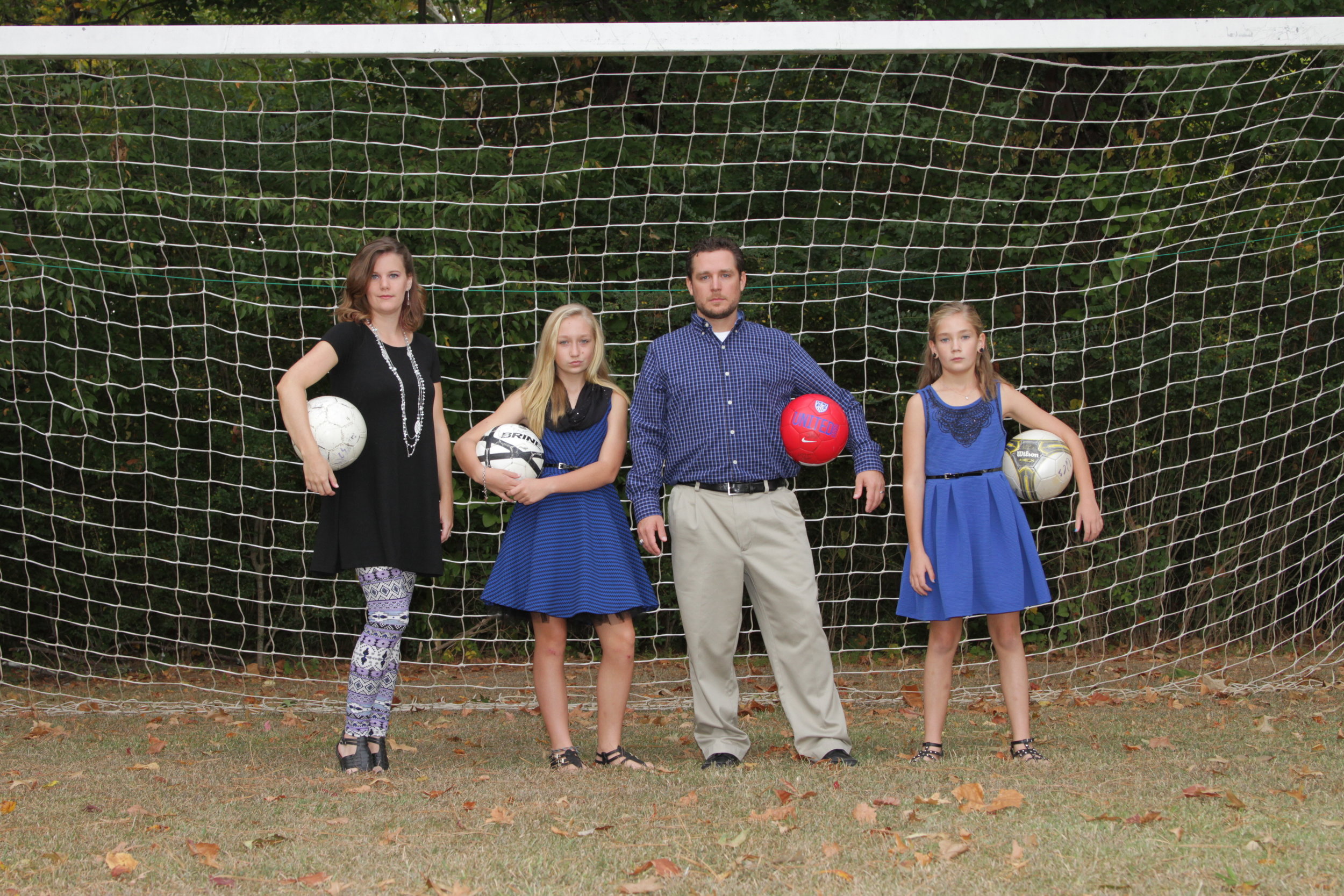
One of my favorite family pictures: mean-mugging with the soccer balls in front of a goal!

One of my favorite family pictures: mean-mugging with the soccer balls in front of a goal!

Within blended families, even before parents may be remarried, every issue becomes more complex because there are more moving pieces. Issues that are already difficult in traditional families now have more moving parts, more opinions, and more egos involved. Issues such as holiday or sports schedules; vacations and activities; teenage issues like cars and clothing and make-up and dating; inter-family and/or sibling rivalries and favoritism (real or perceived); buying patters for household items; and what we call ‘switch-over’ items that travel between homes; all of these are potential stumbling blocks for blended families and thus need to be discussed with patience, care, and compassion by all parties involved. And these are just the beginning. Each blended family will also have circumstances unique to its own situation that will require patience and understanding.

Because of the difficulties, the single biggest asset that parents can bring to blended families is humility: self-forgetfulness and a willingness to serve others by putting their interests first. The key to blended family life is to focus on the proper mindset, because then the actions will more easily follow. There are three tips I want to share (that I elaborate on in my presentations) about how to approach blended family life:

  1. Exercise humility by putting the children first and being willing to serve and listen to others, including the other household and/or other adults involved in the situation.

  2. Be willing to admit fault and compromise. Celebrate every victory, however small.

  3. Keep a long-term perspective, and learn to pick your battles. There’s a large difference between something that is actually dangerous or harmful to your children and something that is simply inconvenient to you or something you don’t like very much. [On issues of dangerous or harmful situations (what I call red-flag issues), seek outside help and guidance, but still try to do so as gently as possible, for the sake of the long-term relationships of the children with all parents involved.]

I sum all of this up by paraphrasing Gandhi: “Be the adult and parent you want your children to become.”

These guidelines might sound simple, but they become quite complex when you actually seek to apply them. I’d love to help you learn how to live a better blended family life in 2019!

Action step: If you or someone you know could benefit from learning more about this, be sure to share this or reach out to them and just encourage them.

Have an amazing 2019, and I look forward to hearing from you. For more info on blended family life, check out the video on my website https://reallifeleading.com/ or click on the Blended Family tab at the top of the page.